
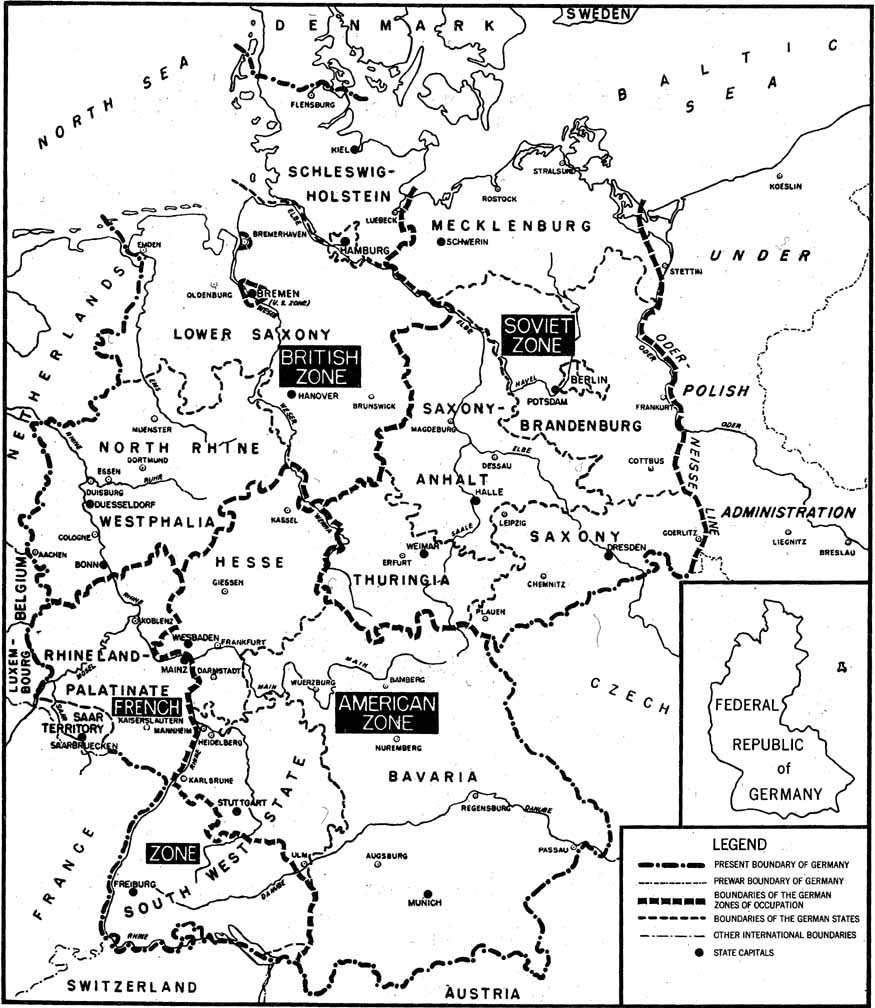
This volume is the third in the monograph series on specific aspects of the international educational and cultural exchange program of the. U.S. Department of State as they have developed since the inception of the program in 1938. The series is published by the Bureau of Educational and Cultural Affairs (CU) for the purpose of providing a wider knowledge of the history of the Department-sponsored person-to-person program, designed to foster mutual understanding between the people of the United States and other peoples of the world. At the same time, as this volume shows, the Department-sponsored program has been dependent from the outset on a solid and enthusiastic partnership with a large body of private organizations, and citizens too numerous to count, here and abroad.
In planning this series, three scholars and educators long associated with the program have provided advice and guidance: Ben M. Cherrington, first chief of the Department's cultural relations program, and for many years a recognized leader in the field of international educational and cultural relations; John Hope Franklin, Professor of American History at the University of Chicago; and Frank Freidel, Professor of American History at Harvard University.
The first volume in the series, America's Cultural Experiment in China, 1942-1949 by Wilma Fairbank, was published in June 1976. The second, written by the director of the CU History Office, J. Manuel Espinosa, entitled Inter-American Beginnings Of U.S. Cultural Diplomacy, 1936-1948, appeared in February of 1977.
This monograph reviews the history of the reestablishment of educational and cultural relations between the United States and Germany after World Wax II. At its peak period it was the largest single U.S. Government-sponsored program with another country either before or since that time. Initiated, as it was, in the wake of the bloodiest conflict in history, moreover, the program was a gesture seldom equaled in international cultural rapprochement and diplomacy. The record of this part of U.S. relations with postwar Germany, as here written, places in perspective a neglected aspect of the basis of our present close friendly relations with the Federal Republic of Germany.
Though these studies are being published under the sponsorship of the Department of State, they do not in any sense embody official U.S. Government views or policy. The author of each monograph is responsible for the facts and their interpretation as well as for the opinions expressed.
WILLIAM K. HITCHCOCK
Acting Assistant Secretary for
Educational and Cultural Affairs
U.S. Department of State
This is not the first account of cultural and educational exchanges between the United States and Germany in the decade following World War II and it is unlikely that it will be the last. Previous writings have dealt in whole or in part with the background, organization, content, and some of the results of the program. (See Henry P. Pilgert, The Exchange of Persons Program in Western Germany (Historical Division, Office of the U.S. High Commissioner for Germany, 1951) ; Howard Wright Johnston, United States Public Affairs Activities in Germany, 1945-1955, doctoral dissertation, Columbia University, 1956 (Ann Arbor, Michigan: University Microfilms, 1974); Harold Zink, The United States in Germany, 1944-1955 (Princeton, New Jersey: D. Van Nostrand Company, Inc., 1957); Lucius D. Clay, Decision in Germany (Garden City, New York, 1950).)
The approach chosen in this study differs from previous ones in that, having been intimately involved in developing the policies which shaped the, character and growth of the program, the author has presented the story from the point of view of the policy maker. From its uncertain beginnings under the Office of Military Government U.S. (OMGUS) to its climax under the Office of the U.S. High Commissioner for Germany (HICOG), this exchange of persons program, as will be shown, was an instrument of U.S. policy, deriving its impetus and content from the objectives which U.S. policy pursued in Germany. After completion of the punitive period, these objectives were physical and political reconstruction and reeducation; and, with changing conditions, reorientation; and, finally, binational cooperation and partnership.
I have tried, therefore, to highlight those features which distinguished the U.S.-German exchange program of this period from Others operated by the U.S. Government then and later, and which, in effect, made it a venture sui generis. Its uniqueness must be understood as the, result of circumstances---unprecedented in human history. Policy makers and administrators of cultural exchanges may therefore find it difficult to use the German experience as a model for other programs. Yet, while history may not repeat itself, there are certain lessons, both positive and negative, to be learned from the German example. The innovations it introduced, its very size, and last but not least, its impact over the years have had an effect beyond its immediate historical and geographical scope. In fact, as will be shown, many of its features, including the wide and generous participation of the American people, have proved their continued relevance and validity. There is, then, some ground for hope, that a more extensive reconstruction of the genesis and development of the program will not only be of interest to students of the history of the period, but may also stimulate future policy makers and program planners and operators in the field of educational and cultural relations.
A word about the sources used: To a large extent they consisted of official documents of the Office of Military Government U.S. (OMGUS), the Office of the U.S. High Commissioner for Germany (HICOG), the Department of State, and the War Department (later the Department of the Army). Most of them were found in the files of the Foreign Affairs Document and Reference Center of the Department of State; at the Washington National Records Center, Suitland, Maryland; in the files of the Bureau of Educational and Cultural Affairs; in the National Archives; and in published reports, collections, studies, and biographies. Regrettably, the governmental files proved to be incomplete as a number of critical documents have been destroyed. The documents that could be located contained essentially records of policy and procedures, tables of organization, budgets, opinion surveys, and official reports. They included only to a limited extent samples of personal accounts submitted by German and American participants in the program reflecting on their experience and on the results of their efforts.
I had, therefore, to rely to a degree on personal recollections. Due to my association from 1945 to 1949 with the division in the Department of State responsible for the formulation of policy and plans for cultural affairs with Germany, and later, during the first years of HICOG, as Director of the Office of German Public Affairs in the Department, I was able to restore parts of the missing record from memory. I offer my apologies for the gaps which I could not fill. In particular, there is a scarcity of data documenting the long-range effect of the exchange program in terms of basic institutional changes. This kind of evidence has never been traced and assembled in a systematic fashion. Early studies of attitudinal changes were made in abundance and are cited in the last chapter to verify partial and often highly personal accounts of program effectiveness, but they do not necessarily permit firm or final conclusions with regard to the, permanence of these changes and their impact upon contemporary German society. Whether such effects can be established beyond reasonable doubt 25 years after the event may be questionable---They could and perhaps should be the subject of a special study. I am therefore grateful to the many persons, both in the United States and in Germany, who at one time or another were associated with OMGUS, HICOG, the Department of State, and private, organizations affiliated with the exchange program, whom I consulted in the course of the study and who helped me fill the gaps in my memory and in the official files (see Acknowledgments).
HENRY J. KELLERMANN
Washington, D.C., December, 1977.
|
I am particularly indebted for advice and assistance to Dr. Herman B Wells, President Emeritus of Indiana University and former Educational and Cultural Adviser to General Lucius D. Clay; Shepard Stone, former Director of the Office of Public Affairs (HICOG) ; Dr. James Morgan Read, former Chief of the Division of Education and Cultural Relations (HICOG); Mrs. Mildred ("Pat") Allen, a former officer of the Department of State and HICOG; Peter Frankel, Indiana University; Dr. Ulrich Littman, Executive Director of the United States Educational Commission in Germany, more popularly known as the Fulbright Commission; Dr. Heinz L. Krekeler, first postwar Ambassador of the Federal Republic of Germany; Dr. Niels Hansen, Minister (a former participant in the exchange program), and Dr. Jurgen Kalkbrenner, former Cultural Counselor of the Embassy of the Federal Republic of Germany; Professor Dr. Hellmut Becker, Director of the Max Planck Institute for Educational Research, Wilhelmshaven; Richard Straus, former associate and Director, Office of Western European and Canadian Programs (CU) ; Dr. Henry B. Ollendorff , Secretary General, Council of International Programs for Youth Leaders and Social Workers, Cleveland; Dr. Harold E. Snyder, former Director, Commission on the Occupied Areas, American Council on Education; Ralph H. Vogel, Director, Operations Staff, Board of Foreign Scholarships, which administers academic exchanges under the Fulbright-Hays Act; Dean B. Mahin, formerly with the Governmental Affairs Institute and now with the Institute of International Education, Washington, D.C.; Vaughn DeLong, former Officer-in-Charge of Cultural Affairs, Office of German Public Affairs, Department of State; Dr. Thomas P. Holland, Case-Western Reserve University, Cleveland; and Frau Eva Ackermann-Stroetzel, American Embassy, Bonn.
For reviewing and editing the manuscript for publication, I wish to thank Vaughn DeLong, Richard Straus, Ralph Vogel, and Elwood Williams, formerly of the Office of Central European Affairs, Department of State, who read sections of the manuscript and offered helpful suggestions.
Special tribute is due to J. Manuel Espinosa and James A. Donovan, jr. of the CU History Office who guided the author through the intricacies of the research and gave valuable technical suggestions for the preparation of the manuscript, and to Helen Shaffer who furnished expert typing skills.
I also wish to acknowledge the help I received from Anne Katherine Pond of the Publishing and Reproduction Division for technical editing; and from Wilmer P. Sparrow and Jessie M. Williams at the Foreign Affairs Document and Reference Center of the Department of State, and officers of the National Archives and of the Washington National Records Center, Suitland, Maryland, for their assistance in locating documents.
The superior figures in the text refer to Notes at the end of each chapter or section. The following is a guide to abbreviations and documentary sources used in the Notes and Appendixes.
| ACE | American Council on Education, Washington, D.C. |
| CAD | Civil Affairs Division, U.S. War Department. |
| CIER | Commission on International Educational Reconstruction. Organized in June 1946 with funds from the Carnegie Corporation in response to a recommendation from UN RRA, q.v., the Preparatory Com mission for UNESCO, and the Department of State. Designated by the U.S. National Commission for UNESCO as the official agency to conduct its post-World War II reconstruction appeal. |
| COA | Commission on the Occupied Areas, American Council on Education. Established in 1948 to promote cultural and educational affairs in the occupied countries. Terminated in 1951. |
| CU/BFS | Files of the Secretariat of the Board of Foreign Scholarships, U.S. Department of State, Washington, D.C. |
| CUM | History Files, Bureau of Educational and Cultural Affairs, U.S. Department of State. |
| DIVO-INSTITUT | Deutsche Institut fuer Volksumfragen; Marktforschung, Meinungsforschung, Sozialforschung. Research Institute, Frankfurt am Main, Germany. |
| GARIOA | Government and Relief in Occupied Areas, Department of the Army. |
| GOAG | Government in Occupied Area of Germany, Department of State. The funds annually appropriated by the U.S. Congress to meet the obligations of the U.S. Government in connection with the government, occupation, and control of occupied areas of Germany, were referred to as the GOAG budget. |
| HICOG | Office of the High Commissioner (U.S.), Germany. |
| JCS | Joint Chiefs of Staff, U.S. |
| NA | National Archives, National Archives Building, Washington, D.C. |
| O/FADRC | Foreign Affairs Document and Reference Center, U.S. Department of State, Washington, D.C. |
| OMGUS | Office of Military Government (U.S.), Germany. |
| OPA | Office of Public Affairs, HICOG. |
| RG 59 | Record Group 59, General Records of the U.S. Department of State, NA and WNRC. |
| RG 107. | Record Group 107, Records of the Office of the Secretary of War, WNRC. |
| RG 165 | Record Group 165, Records of the War Department, General and Special Staff, WNRC. |
| RG 260 | Record Group 260, Records of United States Occupation Headquarters, WNRC. |
| RG 306 | Records of the U.S. Information Agency, WNRC. |
| R G 319 | Records of the Army Staff, WNRC. |
| RG 331 | Records of Allied Operational and Occupation Headquarters, WNRC. |
| RG 353 | Record Group 353, Interdepartmental Committee on Scientific and Cultural Cooperation, NA. |
| SWNCC | State-War-Navy Coordinating Committee, 1944-1947. |
| UNRRA | United Nations Relief and Rehabilitation Administration. |
| USEC/G | United States Educational Commission in the Federal Republic of Germany, the binational body in Germany responsible for the overseas administration of academic ex changes with the United States under the Fulbright Act (now Fulbright-Hays Act). |
| WNRC | General Archives Division, Washington National Records Center, Suitland, Maryland. |
German-American cultural relations began much earlier than the start of the first official educational and cultural exchange activities between the United States and Germany under governmental auspices. Educational interchange had its real beginnings, under private auspices, in the early part of the 19th century, when American scholars visited Germany and other countries of western Europe to meet with their European colleagues in fields of common interest and to pursue research in local libraries and archives. German scholars were invited to visit American universities for a variety of purposes. Yet to attribute these early initiatives to the presence of millions of Germans who had come to the United States over the years and to the sentimental attachment of a German-American minority to their former homeland would be a mistake. It was, rather, growing respect on the part of American intellectuals for German science and scholarship that stimulated these first contacts and that also prompted American universities to emulate German standards in the buildup of their graduate schools.
It would be an even greater mistake, however, to assume that the exchange program which began after the conclusion of World War II merely continued where relationships established during the 19th and the, first part of the 20th century had left off. The break between the United States intellectual community and Germany in the thirties was radical and complete. With few exceptions the postwar effort to restore the broken ties started from point zero.
Nor would it be correct to regard the post-World War II exchange program with Germany, at least in its initial stage, as a chapter of the worldwide effort carried on under governmental auspices. Its purpose, scope, and structure in the late forties and early fifties defied any simple comparison. In the case of the policy pursued by the United States in occupied Germany, it was conceived and designed more sharply than any other program as an instrument of foreign policy. Moreover, with the United States exercising, jointly with the other three occupying powers, supreme governmental authority, the program itself was intended as, and indeed was used as, a branch of the executive arm with appropriate force and reach to assure compliance with official U.S. policy on all levels. It was an integral part of the total military, political, and economic operation. It is worth remembering, then, that although the exchange program with Germany was eventually absorbed by the worldwide cultural exchange program of the Department of State, based on the principle of reciprocity, the German program started out as a unilateral American-initiated, American-funded, and American-directed implement of United States policy serving primarily United States interests, first under the aegis of the Office of U.S. Military Government (OMGUS) and subsequently of the Office of the U.S. High Commissioner (HICOG).
Because it was a program without precedent and presumably without expectation of recurrence, other standards normally used to evaluate exchange programs are not applicable. The immediate benefits all appear to have accrued to the Germans who in the late forties and early fifties were brought from conditions of extreme austerity and political confinement into an environment of economic and social abundance, and who were permitted to reap the benefits of full and unhindered exposure to conditions of freedom and to contacts denied them during the period of Nazi repression, terror, and war. Americans, on the other hand, who were sent to Germany by their government during the occupation period were less likely to profit in similar fashion or degree. Their reward was mainly the kind of intellectual or personal satisfaction that comes from participation in a highly challenging and, historically speaking, truly unique mission.
Yet to view the OMGUS and HICOG exchange programs strictly in terms of immediate, short-term advantages, means to overlook the ultimate benefits of a program with long-term objectives. The exchange experience, after all, was no more than a means to an end; its purpose was to help assist Germans in creating a new society modeled on western democratic concepts. At the same time, both German and American participants contributed to the success of a venture that in the last analysis was expected to be of far-reaching benefit to their countries. It is, then, the political and social benefits rather than the personal gains that will have to serve as the principal yardsticks in measuring the accomplishments of the program.
The importance of official exchanges has never been defined solely in terms of personal benefits. Policy makers have preferred, as a rule, to use national interest as the basic rationale and only more recently, notably after World War II, have come to justify cultural exchange in terms which transcend the frame of national interest by adding broader considerations, such as international cooperation and peace.
The first government-sponsored exchange program was probably instituted by the French in the latter part of the past century. Its announced objective was "to spread the French language and to increase French commercial influence." Prior to and during World War II, Nazi Germany turned cultural exchanges into a propaganda device and a stratagem to prepare, support, and exploit military aggression. The U.S. Government responded to the challenge at the Pan American Conference for the Maintenance of Peace held in Buenos Aires in 1936. It proposed to the other American Republics a Convention for the Promotion of Inter-American Cultural Relations which provided for the exchange of university professors and students under joint governmental sponsorship. This was the first official U.S. initiative in the field of cultural exchange. The Convention was eventually ratified by 17 Latin American countries.
Triggered by extraneous political developments, the character of U.S.-sponsored exchange programs, though basically and avowedly a cooperative educational and cultural enterprise, thus assumed certain political overtones. It was to accomplish "the purpose of encouraging and strengthening cultural relations and intellectual cooperation between the United States and other countries." Also, the exchange of cultural assets was to serve the purpose of promoting the growth, intensification and consolidation of inter-American relations, and the projection and improvement of the American image abroad. This U.S. initiative, which began on a very modest scale, set the stage for the larger government-wide programs that followed.(1)
A Division of Cultural Relations was established in the Department of State in 1938 to initiate the U.S. Government's new venture in cultural relations. The first director of the Division, Ben M. Cherrington, summarized the principles governing the Department's international educational and cultural exchange program when he wrote:
"Two fundamental principles were established at the out set to guide the developing program: first, cultural relations activities of our country would be reciprocal, there must be no imposition of one people's culture upon another; second, the exchange of cultural interests should involve the participation of people and institutions concerned with those interests in the respective countries, that is, the program should stem from the established centers of culture. "(2)
It was also emphasized from the beginning that the program was essentially long-range, and nonpolitical in purpose. Its basic goal was to promote mutual understanding. This was the philosophy and purpose of the program as established and pronounced by the Department of State in the thirties, and even during the war years, by President Franklin D. Roosevelt, Secretary of State Cordell Hull, and other high government officials.
Meanwhile, in the early forties, as the United States girded for war against Axis aggression, the U.S. Government mounted an extensive propaganda program in support of Allied aims, principally through two generously funded Wartime agencies, the Office of War Information and the Office of the Coordinator of Inter-American Affairs. The single goal of these agencies was to help win the war, and the modest efforts of the Department's Division of Cultural Relations were enlisted to contribute to that goal.
In the postwar years, from 1945-1949, the OMGUS period in Germany, the role of cultural and educational programs in international relations, along with information programs, including an overseas broadcasting service, was gaining in favor, stature, and support from the Congress and the American people. With the dismantling of the Office of War Information and the information program of the Coordinator's Office, their activities were reconstituted as an information program in the Department of State in 1945, under the direction of the Assistant Secretary for Public Affairs who also had under his direction the Department's educational and cultural exchange program. With the cold war warming up in the late forties, the educational and cultural exchange program was overshadowed by the much larger information program.
The passage, after much Congressional debate, of the Smith-Mundt Act in January 1948 (Public Law 402, 80th Congress, the Information and Educational Exchange Act of 1948) provided authorization for the first time for a worldwide peacetime program of informational and educational exchange. It established two offices under the Assistant Secretary for Public Affairs, an Office of International Information and an Office of Educational Exchange. The Act defined the purpose of the Office of Information as "to disseminate abroad information about the United States, its people, and the policies promulgated by the Congress, the President, the Secretary of State and other responsible officials of Government having to do with matters affecting foreign affairs." It defined the purpose of the Office of Educational Exchange "to cooperate with other nations in the interchange of persons, knowledge, and skills; the rendering of technical and other services; the interchange of developments in the field of education, the arts and sciences." It included authorization for the expenditure of hard American currencies for these, purposes, thus contrasting with the earlier Fulbright Act of 1946 (Public Law 584, 79th Congress). PL 584 authorized academic exchanges under binational agreements which in the beginning were financed only by foreign currencies paid to the U.S. Government for the purchase of war surplus materials that remained in the various signatory countries after the war.
One of the provisions of the Smith-Mundt Act created two advisory commissions, the Advisory Commission on Information and the Advisory Commission on Educational Exchange. The latter was created to advise the Department of State on all aspects of the conduct of its worldwide educational and cultural exchange program. The Advisory Commission on Educational Exchange met for the first time on September 10-12, 1948. One report of this first meeting noted that among its deliberations the Commission reviewed "policies to be recommended for handling ... this country's responsibility for orientation through reeducation in Germany."(3) Another mentioned briefly that the Commission "reviewed certain key problems which will be subjects for more intensive study at subsequent sessions. Typical of these are such questions as this country's responsibility for reeducation in Germany . . . "(4)
The Chairman of the Advisory Commission on Educational Exchange, B. Harvie Branscomb, Chancellor of Vanderbilt University, proposed to free the rationale for educational exchange as defined in the Act from consideration of narrow political or national interest when he stressed, in a statement to the Commission, the need for the broadest possible role for educational and cultural relations among nations in the pursuit of a world of neighbors living in peace. Chairman Branscomb said:
"We do have a stake in the preservation of a world order in which countries can live at peace . . . But so do the other democratically minded people . . . It will be by cooperation among those nations and peoples who believe that the spiritual heritages of the race are worth preserving, that the present difficulties will be overcome and the problems of our times resolved . . . The program of educational and cultural exchange---not cultural penetration---rests then on a simple and familiar principle. Neighbors who are to cooperate need to become acquainted. In the modern world all nations are neighbors, and all need to cooperate . . ."
Chairman Branscomb continued:
"There is ... a second reason for the program of educational and cultural exchange. It is the basic fact that such a program of exchange is the natural expression of the democratic principles on which and for which we stand. The cultural achievements of the civilized world have been brought about by such cooperation ... We shall continue, in cooperation with other peoples, to build the good life which flows across national boundary lines . . . "(5)
The pursuit of international understanding and cooperation no doubt was meant to, and indeed did, reflect the prevailing mood in the postwar period. It was a highly idealistic premise, but the Smith-Mundt Act and the guidance of the Advisory Commission turned theory into practice. The Act assigned to cultural exchanges the role of helping to build the foundation of an enduring peace and a more stable world order. Furthermore, by casting the government itself in the role of sponsor, it was clearly suggested that greater encouragement of private initiative as the major government task was required, and this called for strong government leadership. Cultural relations had to become a permanent, securely funded function of the government.
As our national experience with exchanges matured and as more sophisticated programs evolved with increasing numbers of individual countries in all parts of the world, greater allowance was made for political, social, and cultural differences in fashioning individual exchange programs with them. Beyond this, World War II and postwar reconstruction proved to be major catalysts in clarifying the direction, scope, and variety of exchange programs. Some programs, notably in the occupied countries (Germany, Austria, and Japan), acquired a political and pragmatic quality never before attained in cultural exchanges. To engage in such programs became in fact act a recognized policy of the U.S. Government in foreign affairs. Such was the case in Germany. But it must be added that the Advisory Commission fully recognized that relations with Germany and the other occupied countries were sui generis, requiring a temporary special relationship. Moreover, while educational and cultural activities and, with them, exchange programs were acknowledged to constitute "an essential part of America's total international effort" and "an aspect of American foreign policy," administrators of the program remained wary of attempts to become too closely allied with specific political objectives.(6) "If we were to make the mistake," a later U.S. Advisory Commission said, "of supposing that the primary purpose of the exchange program is to serve narrowly political ends, the effectiveness of the whole program would be seriously undermined. It is not that kind of program, and in imagining it to be so we would defeat our own ends . . ."(7)
Actually the conflict between purists and pragmatists was never fully resolved. Political considerations continued to motivate and often to shape policies governing the U.S. exchange program. Fundamentally humanitarian and avowedly "nonpolitical," the educational and cultural relations program sponsored by the Department of State was established because international communication and understanding through cooperative person-to-person relations were considered to be a necessary aspect of foreign relations. Mutual understanding through this means was considered to be an important part of the larger foreign policy goal of international peace. Thus the exchange program was from the beginning a part of the international political scene. As we have seen, it was an international political crisis that awakened the U.S. Government to give active attention to the cultivation of a better understanding and appreciation of the cultural and intellectual contributions of our neighbors to the south, and vice versa. The cold war was to introduce another political element by drawing the exchange program into the orbit of the "Campaign of Truth" mounted against the violent anti-U.S. propaganda campaign of the Soviet Union in the late forties and the fifties. In many ways these shifting currents reflected domestic political and hence Congressional interest in enlisting educational and cultural programs in the service of political goals as the world power structure turned sharply to a balance of goals and interests between the two great powers, the United States and the Soviet Union.
It should also be noted that during the years under review both the volume and quality of the programs improved with the growing awareness of the Congress of the political potential of exchanges on the international scene. The recognition of such programs as a part of foreign policy and thus deserving of official support had occurred earlier in other countries than in the United States, each for its own reasons. For the United States, this recognition came about only gradually. The Buenos Aires Convention of 1936, which sparked the initiation of the Latin American program, noted above, waited several years for meager funding. Supplementary legislation on behalf of educational and cultural exchanges, passed in 1939(8) eventually produced the modest Congressional appropriations of $29,240 in 1939 and $75,000 in 1940. With the threat of and finally the outbreak of World War II the amount was boosted to $508,620 in 1941, jumped to $844,390 in 1942, and passed the million-dollar mark in 1943 ($1,685,000). Alter that, the total amount quadrupled reaching a temporary peak in 1947 of $6,040,064.(9) These figures included money from the President's emergency fund for China, the Near East, and Africa. Furthermore, the exchanges thus financed by the Congress and the President included substantial cultural activities that were not only person-to-person exchanges but which also included libraries, books, films, and other types of educational cooperation.
Thereafter, the Fulbright Act and the Smith-Mundt Act made possible the extension of the exchange program to a significant supportive factor of U.S. foreign relations around the globe. Yet it was the post-World War II German exchange program that boosted the total program to unprecedented levels and established an all-time maximum for a single country, with creative ideas for all American government-sponsored educational and cultural relation programs here and abroad, as will be indicated later in this study. Indeed, the U.S.-German exchange program experience, in its essence and quality, spurred at least two other governments to emulate it (Austria and Japan), though on a somewhat lesser scale.
The German exchange program, especially under Military Government (OMGUS) and even more pronouncedly under the U.S. High Commissioner (HICOG), had a series of features which made it exceptional and indeed unprecedented in its rationale, the variety of its innovative features, the sophistication of its targets and project-oriented approach, the extent of public and private support, and above all, its sheer size. In each of its peak years of 1951 and 1952, under HICOG, it provided for more than 3,000 participants---Germans, other Europeans, and Americans. All told, under OMGUS and HICOG, a total of 14,000 persons moved between the United States and Germany and an additional 2,228 persons moved between Germany and other European countries under the program from 1948 to 1956.(10)
A program of this nature could be neither explained nor justified under the terms of then existing worldwide policies and legislation. Additional authorization was needed. It had to be found in the mandate of the Military Government and the High Commissioner to help reconstruct Germany on a democratic basis and thus to achieve a reorientation of the German people toward a stable peace and a democratic system supported by the consensus of the governed. The whole apparatus of military and civilian control was placed at the service of these objectives. All elements of OMGUS and later of HICOG attuned their operation to the specific requirements of U.S. policy for Germany, but key responsibility for directing and supervising the reorientation effort was delegated to the Public Affairs Office of HICOG which thus became in effect the focal point of U.S. reorientation policy. Within the public affairs program itself it was the exchange of persons which provided the long arm for implementation of the reorientation policy. Initiated and operated by what was then the highest authority in Germany, acceptance was assured.
Here was a case without precedent. For the first time in modern history a victor used the vast range of his cultural resources and the potential of his citizens in a common and contributing effort to assist the vanquished in rebuilding his national institutions and his relations with the entire world. Indeed, the reeducation or reorientation program must have appeared as a wholly inconsistent and unorthodox undertaking to a people who remembered the reparations of the "dictate of Versailles" and could therefore rightfully expect far more severe retribution. To many Americans, even when allowing for the accommodation of certain political objectives in U.S. exchange policy, the use of educational and cultural exchanges as an instrument of occupation policy serving the political, economic, social, cultural, and even military aspects of U.S. policy, and performing a highly interventionist function in the internal affairs of another country, may have meant to flout the established and pronounced principles of U.S. cultural exchanges.
In fact, the seeming contradiction between the worldwide purpose of U.S. exchanges and the German exchange program can only be fully understood if it is recognized that OMGUS, and to a lesser degree HICOG, acted as quasi-governments in Germany with all the trappings of national authority---a situation that was extraordinary and not likely to recur.
Nearly from the very beginning, American public opinion was divided on the question of treatment of Germany, with some arguing for harsh and long punishment and others for early rehabilitation. Reorientation was by and large accepted as the correct policy to achieve democratic reforms, but even here critics deplored the "undemocratic" nature implicit in any kind of "occupation policy." At the bottom of such criticisms was the discomfort, even impatience, of the American people with finding themselves in a position of quasi-authoritarian power, and their propensity for rapid change and effective short cuts. With a cooperative and friendly German population evidently eager for change, a policy of protracted regimentation seemed uncalled-for and counterproductive. Another factor that was ever-present in those years was the skepticism of the American people toward the corrigibility of a people whose government had twice caused a world war and the, second time around adopted and mercilessly carried out the unparalleled atrocities of the Nazi regime. Finally, the program came under fire from those who insisted that it demonstrated an American posture of paternalism toward the vanquished.
As the record will show, the exchange program underwent almost constant adjustments. The latter were necessary, because policies kept changing. Policies, in turn, had to be readjusted to developments, inside and outside of Germany, which forced the course and the pace of Allied decisions within ten years from total control and tutelage to nearly complete restoration of sovereignty. In corresponding stages the exchange program grew from a modest unilateral venture, wholly controlled by the U.S. Government or that of other Allies, to a full-fledged binational effort based on equality and reciprocity.
A number of factors contributed to these radical and rapid changes. The "miracle" of German recovery, no doubt, demanded recognition and reward. Acquiescence had turned into cooperation which permitted substitution of voluntary contribution in place of mandatory controls. Political, social, and educational reforms were producing viable institutions which deserved encouragement and support (through cultural exchanges along with similar technical exchanges under the Marshall Plan). Extraneous developments accelerated the process. The breakdown of the quadripartite alliance and of its control apparatus, the blockade of Berlin, and the cold war opened the door for West German alliance with the West far ahead of any timetable envisaged in 1945. There was a growing recognition that among the many measures adopted by the United States and the other Allied authorities in Germany, from punitive. to reconstructive, the exchange program ranked among the most positive and least controversial of all public affairs programs. Moreover, being, by definition, a bilateral rather than a multilateral effort the program was intended to and eventually so organized as to involve German nationals progressively in the implementation of U.S. policy aiming toward democratic reform. A major turning point in this direction was the transfer of the administration of the exchange program activities from the Department of the Army to the Department of State in 1949, and of its operation from OMGUS to HICOG.
As participation of German authorities and citizens was gradually increased in the control and conduct of the program, and as their role of more beneficiaries gradually changed to that of participants, the exchange program helped turn the reorientation program itself into a binational undertaking. This fact as much as any other must be credited for the success of the program, especially as reinforced by the introduction of the binationally administered Fulbright program in Germany in 1952. It also explains why the exchange program outlived most other features of the reorientation effort, and makes understandable the great popularity which the program enjoyed from its inception to the present, why it gained continuously in prestige, and why it attracted an ever-increasing German financial contribution.
The rationale of the program as part of the postwar reconstruction effort also explains its vast size. Looking back, perhaps nothing but a massive effort engaging nearly all strata of German society could have achieved the political and social changes needed for democratic reform.
The momentum generated by the Allied or more specifically the U.S. program of democratic reconstruction assured the success of this effort and permitted the step-by-step elimination of controls and steady progression toward partnership on equal terms. As the reorientation program changed its character and methods over the years, gradually losing its earlier didactic approach, so, as one of its principal features, did the program for educational and cultural exchange. Toward the end of the period under discussion the exchange program between the United States and Germany had become fully assimilated into the worldwide educational and cultural program of the U.S. Government.


